 |
 |
||||||||||||
|
 |
|
|||||||||||
|
|||||||||||||
 |
 |
 |
 |
 |
 |
 |
 |
 |
|||||
 |
 |
 |
 |
 |
 |
 |
|||||||
 |
|||||||||||||
|
|||||||||||||
 |
|
|
|
|
|
|
|
|
|
|
|
|
|
Main pages
Appendices
4 Pichi-Ropulli Osorno report •
9 Branchline station photos 2 •
11 Barros Jarpa Noel agreement ª
Chapter 5
The south end of the Chilean broad gauge



Rolling stock
It was the EFE’s practice to invite tenders for the supply of locos and rolling stock, these being submitted usually by local agents such as Saavedra Benard y Cía., Walter Bade, Vorwerk y Cía., or W. R. Grace & Co. Thus in 1905, for example, stock was being imported from Barney & Smith, Baume et Marpent, Húngara Raab Gyor, Franco-Belge, and the Pressed Steel Car Co., whilst local builders such as the Maestranza Auxiliar de Yungai, Balfour Lyon, and Hardie & Co were also constructing wagons. Purchase decisions seem to have been made solely on price, with little thought being given to standardisation (25).
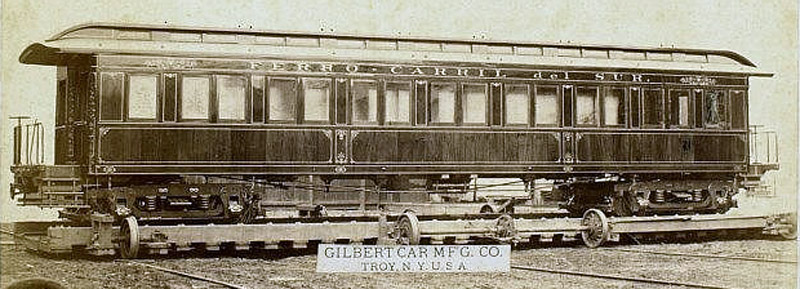
Whilst this appears to be an American-built car for the Ferrocarril del Sur, confirmation is needed that it was indeed for Chile rather than for any other railway of that name.
At that date older stock was still identified as being from British or US builders, as the Valdivia railway stock list below left illustrates, but as time went on the German firm of Linke-Hofmann Werke AG increasingly cornered the market for passenger vehicles in Chile.
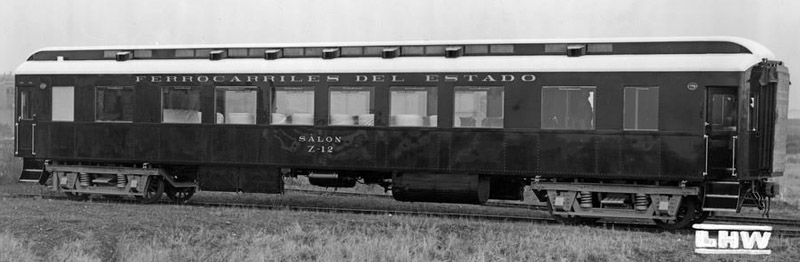
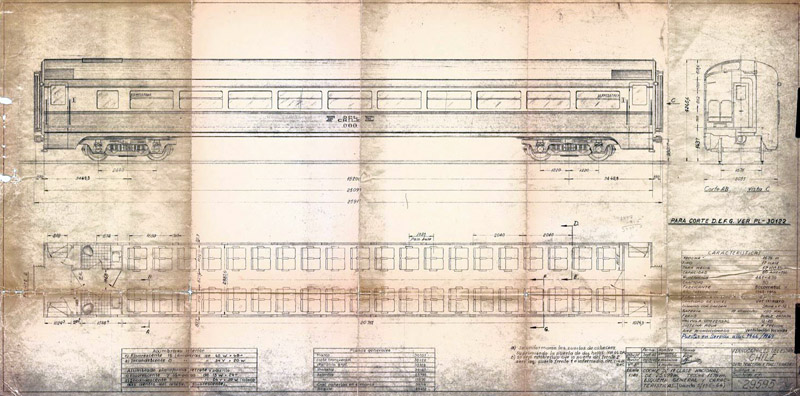
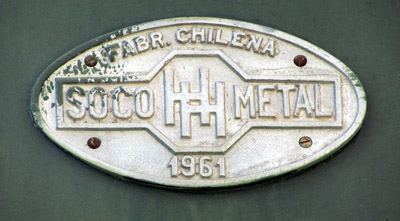
In later years, however, the market opened up to other manufacturers: Socometal in Chile itself, MaterFer in Argentina, and Japanese builders for the AEZ electric sets which served the Santiago to Chillán route from the early 1970s onwards. More recently both new and second-hand vehicles have been imported from Spain.
The drawing below shows a Chilean built coach by Socometal.
Wagons
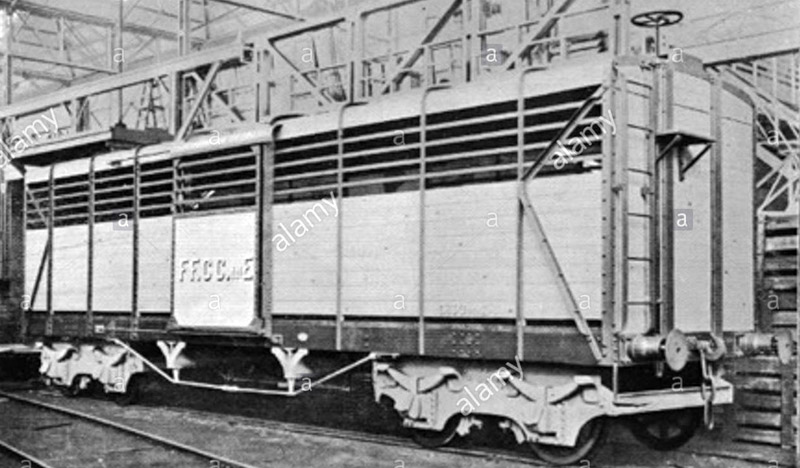
The next photo shows a cattle wagon by the French builder Baume et Marpent, presumably taken at the builder's works before shipment.
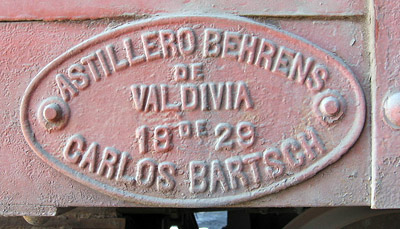
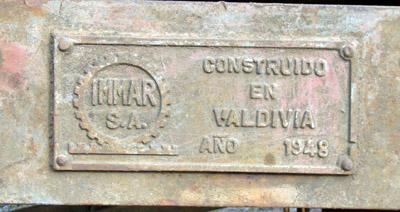
Several shipyards in Valdivia built wagons for the EFE, dspite not having a direct rail connection to the national network. Here are two builders’ plates from these constructors.
11-3-2018
RETURN |
NEXT PAGE Construction of the southern branch-lines |